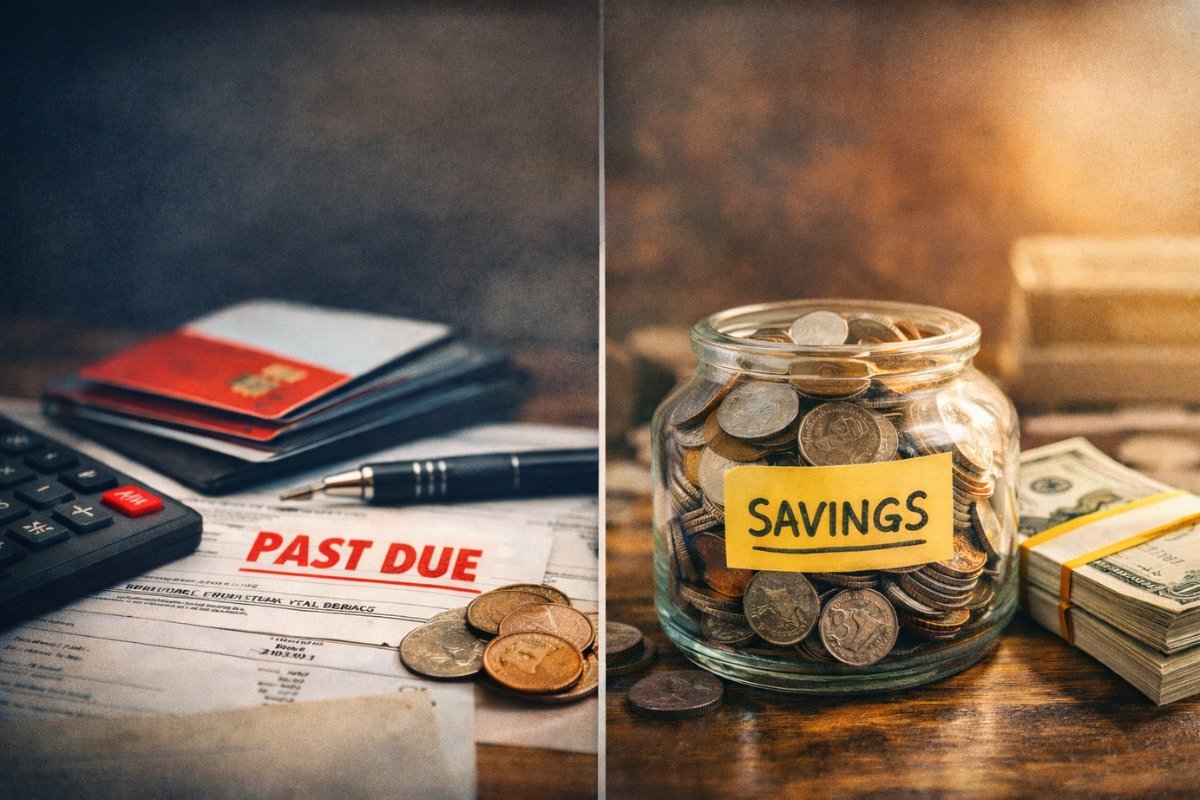
If you are trying to decide whether to pay off debt or build savings first, the answer depends on your financial situation. In most cases, the smartest approach is to build a small emergency fund first, then focus aggressively on paying off high-interest debt.
Without savings, even a small unexpected expense can push you deeper into debt.
Why You Need Some Savings First
If you use all of your extra money to pay down debt and have nothing saved, you may end up relying on credit cards again when something unexpected happens.
Car repairs, medical bills, or job interruptions can quickly undo your progress.
A common recommendation is to build a starter emergency fund of $500 to $1,000 before focusing heavily on debt payoff. This creates a financial buffer and prevents new borrowing.
When Paying Off Debt Should Be the Priority
After you have a small emergency cushion, high-interest debt should usually become your main focus.
Credit cards often carry interest rates of 18 percent, 20 percent, or even higher. At those rates, your balance can grow quickly if you only make minimum payments.
If your debt interest rate is higher than what you could reasonably earn in a savings account, paying off that debt provides a guaranteed return. Eliminating a 20 percent interest rate is more powerful than earning 4 percent in savings.
What About Low-Interest Debt?
Not all debt is the same.
If you have:
– Low-interest student loans
– A reasonable car loan
– A fixed-rate mortgage
You may choose to balance debt repayment with saving and investing, especially if the interest rate is relatively low.
In those cases, it can make sense to:
– Continue making required payments
– Build a larger emergency fund of 3 to 6 months of expenses
– Begin investing for long-term growth
A Simple Strategy That Works for Most People
Here is a balanced approach that works well for many households:
1. Build a starter emergency fund of $500 to $1,000.
2. Pay off high-interest debt aggressively.
3. Once high-interest debt is gone, expand your emergency fund to cover 3 to 6 months of expenses.
4. Begin investing for retirement and other long-term goals.
This order reduces financial stress and minimizes interest costs.
What If I Feel Behind Financially?
If you feel overwhelmed, focus on one step at a time. Trying to save heavily while also attacking large debt balances can feel discouraging.
Progress builds momentum. Eliminating even one credit card balance can create psychological relief and motivate you to continue.
The Bottom Line
In most situations, start by saving a small emergency fund, then prioritize paying off high-interest debt. Once that debt is eliminated, shift your focus to building larger savings and investing.
The key is balance and consistency. Protect yourself with a financial cushion first, then eliminate the debt that is costing you the most.