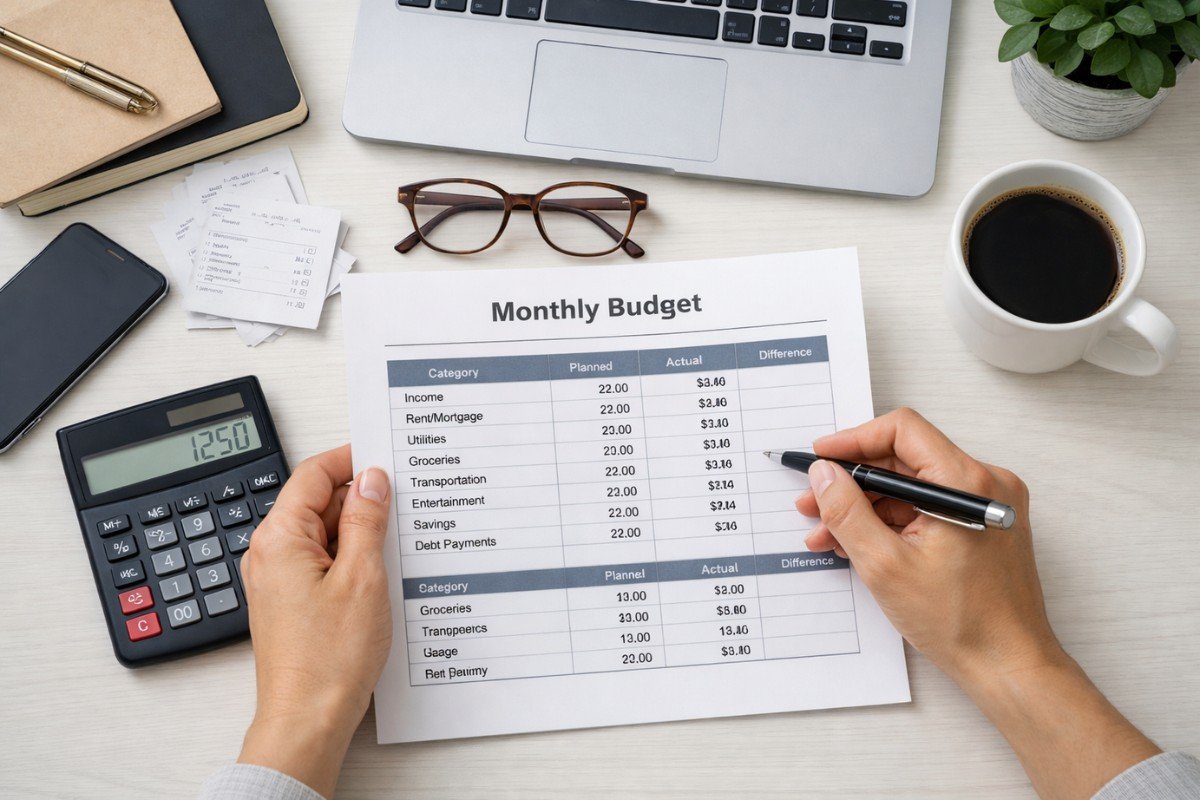
Creating a monthly budget is one of the most important steps you can take toward financial stability. A budget is not about restricting yourself. It is about telling your money where to go instead of wondering where it went. When done correctly, a simple monthly budget gives you clarity, control, and confidence over your finances.
The first step is understanding your total monthly income. This includes your take-home pay after taxes and deductions. If your income varies, calculate the average of the last three to six months to get a realistic baseline. Using your net income rather than your gross income ensures you are budgeting money that actually reaches your bank account.
Next, list your fixed expenses. These are bills that stay relatively the same each month, such as rent or mortgage payments, car payments, insurance, subscriptions, and minimum debt payments. Fixed expenses are the foundation of your budget because they represent your non-negotiable obligations. Once you subtract these from your income, you’ll see how much flexibility you have left.
After fixed expenses, review your variable spending. This includes groceries, gas, dining out, entertainment, shopping, and personal expenses. The easiest way to estimate these categories is by reviewing the past one to three months of bank statements. Many people are surprised to see how small daily purchases add up. Tracking this spending gives you insight into where adjustments may be needed.
A simple framework many beginners use is the 50/30/20 rule. This guideline suggests allocating about 50 percent of your income to needs, 30 percent to wants, and 20 percent to savings and debt repayment. While this formula may not fit every situation perfectly, it provides a helpful starting point for balancing essentials, lifestyle, and future goals.
Once you have assigned amounts to each category, compare your total expenses to your income. If you are spending more than you earn, you will need to reduce discretionary categories such as dining out or entertainment. If you have money left over, consider increasing your emergency savings or accelerating debt payments. The goal is to give every dollar a purpose before the month begins.
Finally, remember that a budget is not a one-time exercise. It should be reviewed and adjusted often. Life changes, expenses shift, and income can fluctuate. A successful budget evolves with your circumstances. Even small adjustments can make a significant difference over time.
A beginner’s monthly budget does not need to be complicated. A simple spreadsheet, budgeting app, or even a notebook can work. The most important factor is consistency. When you track your money regularly and make intentional decisions, you build long-term financial discipline that supports your larger goals.